
Defining Adaptive Velocity: The Architecture of Strategic Execution
Execution relies entirely on an institution's adaptive velocity. Learn how to locate strategic bottlenecks across the sensing, deciding, and acting phases of execution.


Credit unions frequently struggle with institutional speed. While leadership teams acknowledge that execution dictates success, there is a recurring failure to understand the underlying mechanics of that execution. Execution relies entirely on an institution's adaptive velocity—the rate at which an organization can sense an environmental shift, decide on a course of action, and act. When credit unions stall, their adaptive velocity is blocked in one of these three distinct operational phases.
The Three Phases of Adaptive Velocity
Adaptive velocity serves as the structural engine of our Living Strategy framework. It requires seamless transition through three specific operational states:
- Sensing: Gathering accurate market and operational data.
- Deciding: Filtering data to authorize a strategic response without artificial governance friction.
- Acting: Mobilizing resources to implement the authorized decision.
A breakdown in any single phase halts the entire system. A leadership team with excellent market intelligence but a gridlocked committee structure will lose to a competitor with a streamlined governance model.
Assessing Your Strategic Friction
Assessing an institution's adaptive velocity requires identifying where strategic friction naturally occurs. Leadership teams can apply the following diagnostic criteria to locate internal bottlenecks:
- If the executive team routinely learns about shifting member expectations after they impact the balance sheet, then the bottleneck exists in the Sensing phase, requiring an upgrade to intelligence gathering protocols.
- If data is abundant but major investments require supplementary feasibility studies and delayed votes, then the bottleneck exists in the Deciding phase, indicating a structural misalignment in governance protocols.
- If strategic initiatives are rapidly approved but frequently miss deployment deadlines due to resource constraints, then the bottleneck exists in the Acting phase, requiring a reassessment of operational capacity.
To explore the complete Adaptive Velocity framework and identify your institution's specific execution bottlenecks, download our Living Strategy playbook.
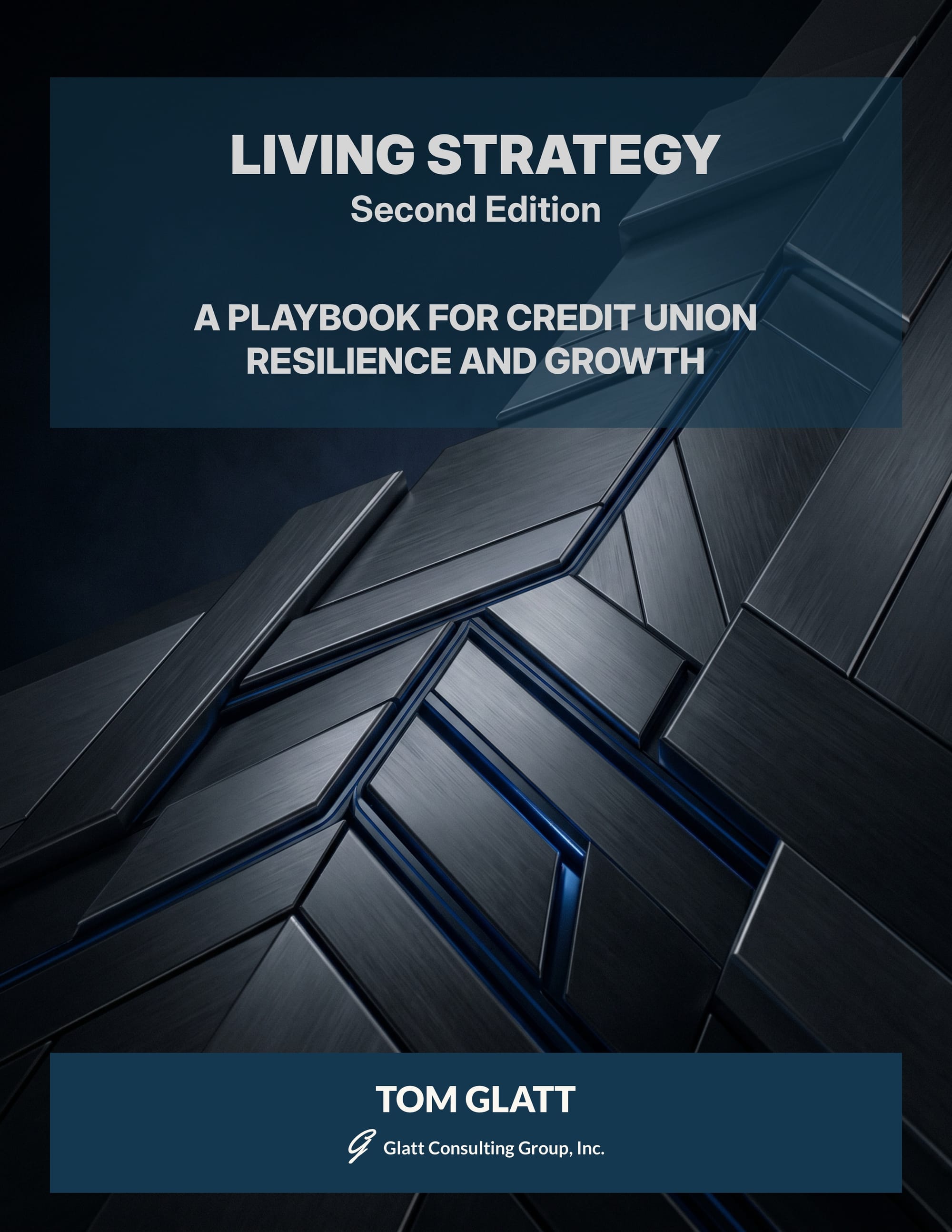
Access the full Living Strategy methodology free in our executive Resource Library.
Continue the Series
This article is part of a living three-part series. To get the complete picture and see how these concepts intersect, explore the related foundational guides below:
 Tom Glatt
 Tom Glatt